

Table of Contents
- How These Aloha Wear Brands Compare at a Glance
- Shakatime: Mass-Market Island Style and Accessibility
- Lexbreezy: Resort Wear with a Modern Edge
- Authentic Hawaiian Clothing Brands: The Boutique Difference
- How to Spot Authentic Aloha Print and Quality Construction
- Sizing Standards and Fabric Durability Across Brands
- Which Brand Fits Your Needs: Decision Framework
- Conclusion
Last Updated: August 11, 2026
How These Aloha Wear Brands Compare at a Glance
When shopping for island-inspired apparel, the choice between shakatime vs lexbreezy vs boutique brands comes down to what you value most: accessibility, modern resort aesthetics, or authentic local craftsmanship. Each occupies a distinct position in the aloha wear landscape, defined by manufacturing origin, design philosophy, and price positioning.
This guide breaks down how these brands differ, where each excels, and which makes sense for your needs. We'll examine manufacturing origins, fabric quality, sizing standards, and real-world durability. By the end, you'll know exactly which category serves your wardrobe best.
Shakatime: Mass-Market Island Style and Accessibility
Shakatime has built its reputation on making island vibes accessible to mainstream consumers through competitive pricing and wide distribution. Their approach centers on bringing aloha wear to people who want the aesthetic without premium price tags.
The brand's strength lies in volume and availability. Shakatime pieces are designed for straightforward, everyday wear, casual shirts, tank tops, and simple print designs that work across multiple occasions. Their custom cut and sew operations prioritize efficiency, which keeps costs down but means less customization in fit compared to boutique alternatives.
Sizing at Shakatime follows standard retail conventions, though many customers report inconsistency across product lines. Some items run generous; others fit tighter than expected. This is a common trade-off with mass-production: achieving perfect fit consistency becomes secondary to maintaining production speed.
Fabric durability is where mass-market positioning shows its limits. Shakatime pieces use affordable cotton blends and synthetic materials that feel good initially but fade faster with regular washing. The weave is typically lighter, making garments breathable but more prone to pilling and color loss after 20-30 washes. For seasonal or short-term wear, this works fine. For pieces you plan to wear for years, this becomes problematic.
The real value proposition is straightforward: recognizable island style at a price point that doesn't require much deliberation. A Shakatime shirt costs significantly less than boutique alternatives, making it easy to build a casual resort wear wardrobe without major investment.
Lexbreezy: Resort Wear with a Modern Edge
Lexbreezy positions itself in the middle tier, targeting consumers who want more sophistication than mass-market options but aren't ready for full boutique pricing. The brand emphasizes modern resort wear, pieces that work equally well at a beach vacation or in an upscale casual setting.
Lexbreezy differentiates through print design and fabric selection. Their textile patterns move beyond standard tropical repetition into more abstract, artistic interpretations of island aesthetics. You'll find geometric takes on ocean waves, minimalist representations of local flora, and color palettes that lean toward muted tones rather than high-saturation brights.
The fabric quality sits noticeably above mass-market options. Lexbreezy uses higher-grade cotton blends and invests in dyeing processes that produce more stable colors. Many pieces feature reinforced seams, finished hems, and careful attention to how fabrics drape on the body. Colors fade more gradually, and structural integrity lasts longer than typical mass-market alternatives.
Sizing at Lexbreezy is more consistent than Shakatime, with a slightly more tailored cut. This works well for people who prefer defined silhouettes but can be problematic for those seeking relaxed, oversized comfort.
The price point reflects these improvements. Lexbreezy pieces typically cost 40-60% more than equivalent Shakatime items, significant but accessible for regular wardrobe building. For many consumers, this represents the sweet spot: noticeable quality improvement without entering premium boutique territory.
Authentic Hawaiian Clothing Brands: The Boutique Difference
Authentic Hawaiian clothing brands operating at boutique scale represent a fundamentally different approach to aloha wear. These retailers, often small local operations or independent designers, prioritize design authenticity, local manufacturing, and supply chain transparency in ways that mass-market and mid-tier brands cannot match.
The defining characteristic of boutique brands is their commitment to local entrepreneurship. Many are owner-operated or family-run businesses that maintain manufacturing relationships with local producers for years. When a boutique brand says their pieces are made locally, you can typically trace the supply chain to specific facilities.
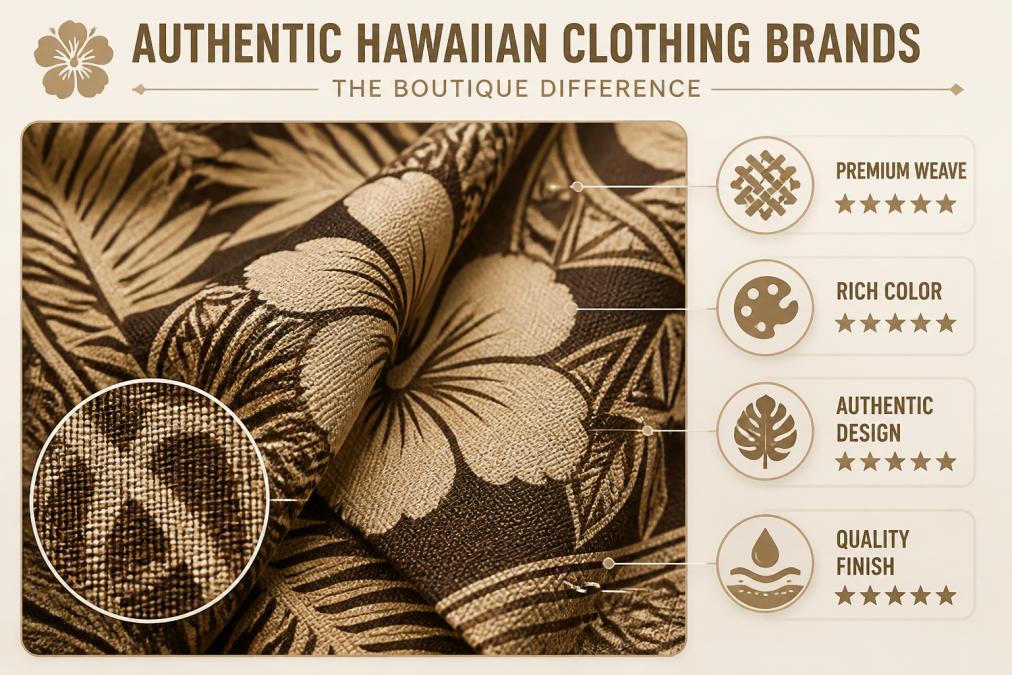
Design philosophy differs markedly from mass-market approaches. Boutique brands often draw from traditional Hawaiian design principles, cultural symbolism, and historical aloha wear aesthetics. Print designs tend to be more nuanced, incorporating actual cultural patterns and color combinations rooted in natural island landscapes, creating pieces that feel connected to place rather than generic tropical decoration.
Fabric selection at boutique brands reflects a commitment to durability and environmental responsibility. Many source premium cotton, linen blends, and sustainable materials. Dyeing processes are often more careful, sometimes using natural dyes or low-impact chemical processes. The result is fabric that maintains color and structural integrity through dozens of washes. A boutique aloha shirt worn weekly can easily last 5-10 years.
Garment construction in boutique pieces shows meticulous attention to detail. Seams are reinforced, hems are hand-finished in many cases, and overall construction reflects time investment that mass production cannot accommodate.
The price premium is substantial. Boutique aloha wear typically costs 2-3x more than mass-market alternatives and 50-100% more than mid-tier options. This reflects real differences in material costs, labor, and production scale, but it also means these pieces require more intentional purchasing decisions.
Sizing at boutique brands varies widely because many offer custom fit or limited production runs. This can mean longer wait times but also means pieces fit more precisely.
How to Spot Authentic Aloha Print and Quality Construction
Distinguishing authentic aloha print from generic tropical design requires understanding what makes the difference. Authentic aloha wear draws from Hawaiian cultural traditions, historical design patterns, and artistic principles that reflect the islands' natural environment and cultural heritage.
Authentic aloha prints typically feature specific characteristics. Patterns often incorporate elements from traditional Hawaiian quilting, lei designs, or historical motifs. Colors are usually inspired by natural island landscapes, ocean blues, volcanic reds, plant greens, rather than artificial neon or high-saturation brights. The overall composition tends toward balance and intentional negative space.
When examining a print, ask: does this design tell a story about place and culture, or is it just tropical decoration? Authentic pieces often feature recognizable symbols, specific flowers with cultural significance, or design elements that connect to Hawaiian artistic traditions.
Quality construction shows up in specific, observable ways. Run your hand along seams: authentic boutique pieces have reinforced stitching with tight, even tension. Check the hems: hand-finished hems indicate time investment and attention to detail. Look at fabric weight and weave: premium aloha wear uses substantial fabric with visible structure and texture.
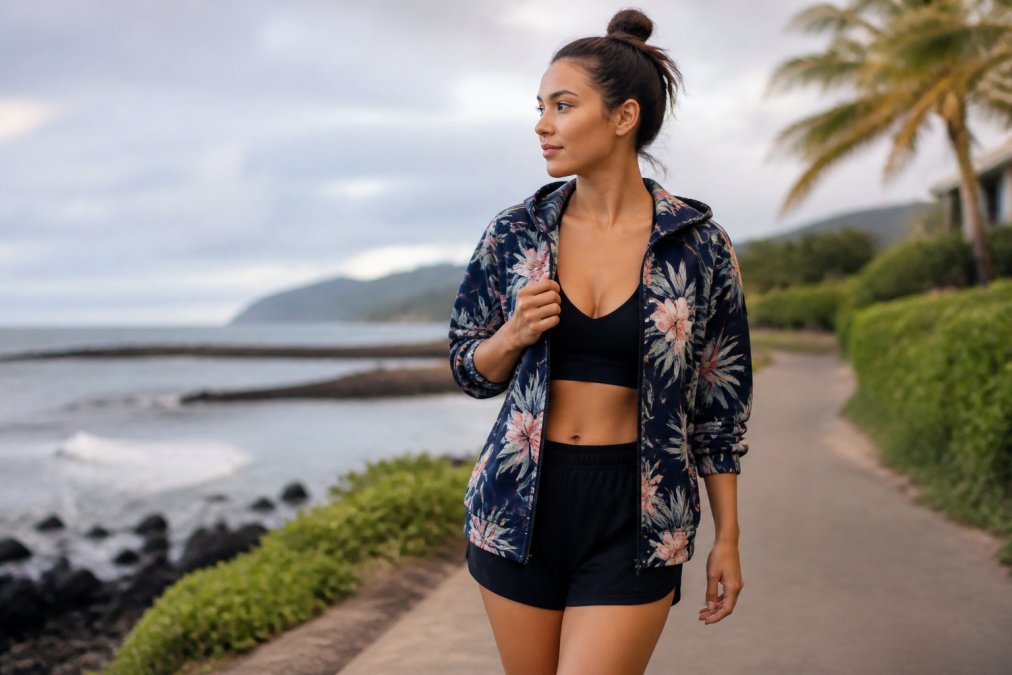
Examine how color is applied. High-quality pieces use dyeing processes that saturate fabric evenly, with colors that maintain depth when you look at the back. Lower-quality prints sometimes show color only on the surface. Premium fabrics also show color stability across the entire piece.
Check seam placement and pattern matching. In quality garments, pattern elements align intentionally at seams rather than appearing random. Sleeve seams should follow the print design logically. This level of detail requires more skilled cutting and sewing.
Feel the fabric between your fingers. Authentic resort wear uses fabrics with substance and texture. The weave should feel tight and substantial, not loose or thin. Higher-end cotton has a slight texture; it doesn't feel plastic-coated. Linen blends should feel crisp but not stiff.
Sizing Standards and Fabric Durability Across Brands
Sizing consistency varies dramatically across shakatime vs lexbreezy vs boutique brands.
Mass-market brands like Shakatime typically use relaxed, oversized sizing that prioritizes comfort and accommodates many body types. A medium often fits generously, which appeals to consumers seeking loose, casual wear but reduces fit precision.
Lexbreezy sizing is more structured. Their pieces tend toward true-to-size or slightly fitted cuts, offering better silhouette definition but requiring more accurate size selection. Many Lexbreezy shoppers report consistent sizing across product lines.
Boutique brands vary significantly. Some maintain standard sizing; others offer custom fit or limited-run pieces. Many boutique retailers provide detailed fit guides or offer exchanges without hassle.
Fabric durability is where long-term value becomes apparent. Shakatime pieces typically show visible wear after 30-40 washes. Colors fade noticeably, fabric begins to pill, and seams may show stress.
Lexbreezy fabrics hold up better. Quality dyeing means colors remain vibrant through 50-75 washes. The tighter weave means minimal pilling. These pieces can reasonably be worn multiple times per week for 2-3 years before showing significant wear.
Boutique aloha wear is engineered for durability. Premium fabrics and careful construction mean these pieces can handle 100+ washes while maintaining appearance. The realistic lifespan is 5-10 years of regular wear, which dramatically changes the cost-per-wear calculation.
| Brand Category | Typical Price Range | Fabric Durability | Sizing Consistency | Best For |
|---|---|---|---|---|
| Mass-Market (Shakatime) | $25-$50 | 30-40 washes | Variable | Budget-conscious, seasonal wear |
| Mid-Tier (Lexbreezy) | $60-$100 | 50-75 washes | Consistent | Quality-conscious, regular wear |
| Boutique Brands | $100-$200+ | 100+ washes | Variable (custom options available) | Long-term investment, authenticity seekers |
Care instructions matter significantly for durability. Boutique pieces often require careful washing, cold water, gentle cycles, air drying, which extends lifespan but requires commitment. Mass-market pieces tolerate regular washing but fade faster regardless. Lexbreezy pieces fall in the middle: they benefit from gentle care but don't require it to maintain reasonable durability.
Which Brand Fits Your Needs: Decision Framework
Choosing between shakatime vs lexbreezy vs boutique brands depends on your priorities, budget, and how you plan to use the pieces.
Choose mass-market (Shakatime) if: You want to build an island-inspired wardrobe quickly without major expense. You're comfortable replacing pieces every 1-2 years. You prefer relaxed, oversized fits. You're shopping for occasional wear, vacations, or seasonal rotation. You value accessibility and simplicity over premium quality.
Choose mid-tier (Lexbreezy) if: You want noticeably better quality than mass-market without premium pricing. You plan to wear island-inspired pieces regularly, multiple times per month. You prefer refined design aesthetics and modern resort wear styling. You value consistent sizing and reliable fit. You want pieces that last 2-3 years of regular wear.
Choose boutique brands if: You prioritize authentic design and cultural connection to aloha wear. You want to support local entrepreneurship and understand supply chain transparency. You plan to wear pieces for years, not seasons. You value premium fabric quality and meticulous construction. You're comfortable paying more for pieces engineered to last. You view aloha wear as meaningful expression rather than casual resort decoration.
For most consumers, the decision comes down to one question: am I building a temporary wardrobe, or am I investing in pieces I'll wear for years? If temporary, mass-market makes sense. If multi-year wear is the goal, mid-tier or boutique options deliver better value despite higher upfront cost.
Conclusion
The choice between shakatime vs lexbreezy vs boutique brands isn't about finding the objectively "best" option, it's about matching your priorities with the right brand philosophy. Mass-market brands excel at accessibility. Mid-tier options deliver quality improvements at reasonable prices. Boutique brands prioritize authenticity and durability for consumers willing to invest more.
What matters most is understanding what you're actually buying. A Shakatime piece serves a different purpose than a boutique aloha shirt, and that's fine. The mistake is expecting mass-market pricing to deliver boutique durability, or assuming mid-tier options offer boutique-level authenticity.
If you're serious about building an island-inspired wardrobe that reflects your personal journey and resilience, Inkspired Creations offers pieces designed with that intention. Their commitment to quality construction, meaningful design, and flexible payment options makes it easier to invest in pieces you'll actually wear for years. Shop now and discover aloha wear that celebrates your strength and purpose.
Frequently Asked Questions
What makes authentic Hawaiian clothing brands different from mass-market aloha wear?
Authentic Hawaiian clothing brands typically source fabrics locally, employ local artisans, and maintain transparent supply chains. They focus on custom cut and sew techniques and print design that reflect genuine island aesthetics. Mass-market retailers prioritize volume and lower price points, often outsourcing production and using generic tropical patterns. Boutique brands emphasize garment construction quality, sustainable fashion practices, and direct relationships with consumers who value the story behind each piece.
How do I know if aloha print is authentic?
Authentic aloha print features traditional Hawaiian motifs like hibiscus, plumeria, and ocean patterns with cultural significance. Look for precision in the print alignment, consistent color saturation across the fabric, and patterns that tell a story rather than generic tropical designs. Check the label for manufacturing origin and whether the brand discloses its textile sourcing. Authentic pieces typically have tighter weaves, reinforced seams, and fabric that feels substantial. Ask brands about their design aesthetic and whether they work with local entrepreneurs or cultural consultants.
Are boutique aloha wear brands worth the higher price?
Boutique brands cost more because of smaller production runs, higher-quality textiles, local manufacturing, and transparent supply chains. Pieces typically last longer due to superior fabric durability and construction. If you wear island-inspired apparel frequently and value longevity, boutique options offer better value over time. Mass-market alternatives work if you want trend-driven pieces or family matching sets at lower retail price points. Consider your wardrobe staples needs: boutique brands excel for investment pieces; mass-market works for seasonal or trendy items.
How do sizing standards differ between these brands?
Sizing varies significantly across brands. Mass-market retailers often use relaxed, oversized cuts suited for resort wear and comfort. Boutique brands typically offer more tailored fits with custom cut and sew options. Lexbreezy falls between these approaches with modern, fitted silhouettes. Before purchasing, check each brand's size chart and customer reviews for fit feedback. Many boutique brands offer exchanges or adjustments. Island-inspired apparel generally runs larger than traditional retail, so sizing down one size is common across all three categories.
This article was written using GrandRanker