

Table of Contents
- The True Cost of Quality Apparel
- Raw Materials and Sourcing: Where Premium Prices Begin
- Craftsmanship and Manufacturing Complexity
- How to Identify High Quality Fabric and Construction
- Calculating Cost Per Wear for Long-Term Value
- Benefits of Sustainable Fashion and Ethical Production
- Quality Control, Durability Standards, and Warranty
- Fast Fashion vs. Slow Fashion Economics
Last Updated: August 26, 2026
The True Cost of Quality Apparel
Quality apparel costs more because it absorbs genuine expenses that fast fashion ignores: raw materials sourced for durability, fairly compensated labor, and manufacturing processes that prioritize longevity. These aren't marketing talking points, they're the structural differences between clothing that lasts three seasons and clothing that survives hundreds of wears.
At Inkspired Creations, we've built our entire approach around this reality. Every piece reflects the actual costs embedded in quality: premium natural fibers, thoughtful construction, and designs meant to become part of your permanent wardrobe. The Women's FEMME Ideal Racerback Tank, for example, uses 60% combed ring-spun cotton and 40% polyester at 4 oz/yd², a deliberate material choice that costs more upfront but provides a tank that survives hundreds of washes without degrading.

Below, we'll break down exactly where those costs come from, how to identify quality yourself, and why the long-term math makes premium apparel the smarter investment.
Raw Materials and Sourcing: Where Premium Prices Begin
The fabric itself is where quality apparel costs more begins. Premium natural fibers cost more because they're actually more expensive to produce. Organic cotton requires farms that avoid synthetic pesticides and fertilizers, yielding less per acre than conventional farming (usda.gov). Ring-spun cotton, where fibers are twisted together rather than simply carded, creates stronger yarns with better durability. Merino wool commands higher prices because it regulates temperature better and resists odor more effectively than standard wool blends.
High-quality synthetic fibers are engineered to resist pilling, maintain color through repeated washing, and preserve stretch without losing shape. Cheap synthetics degrade quickly, developing fuzzy texture within a few wears and losing elasticity.
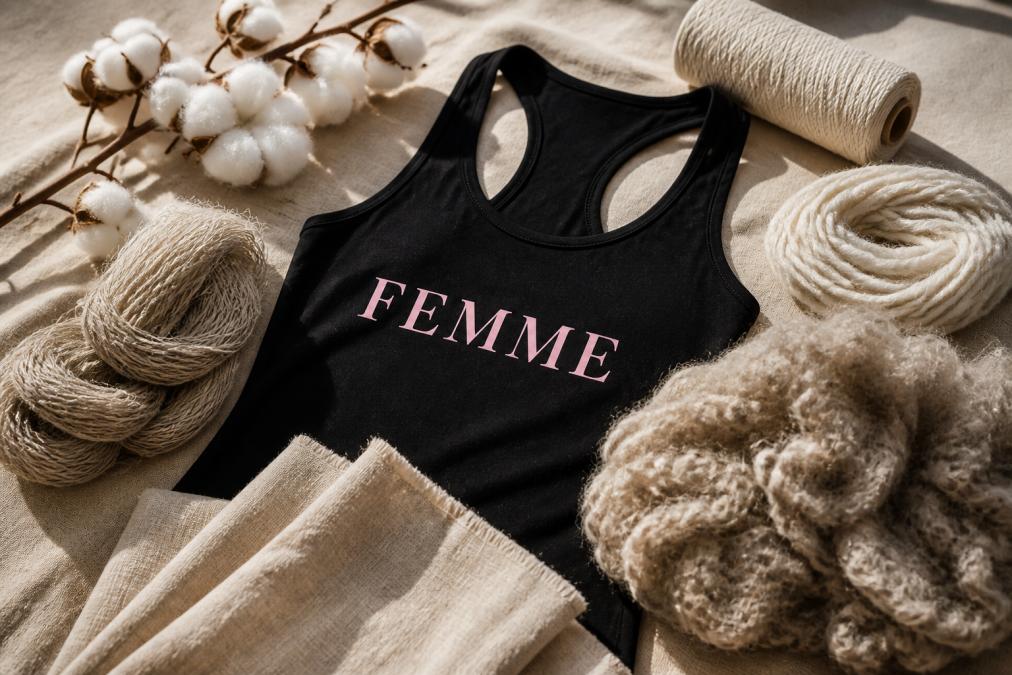
Sourcing also factors into supply chain costs. Quality-focused brands source from suppliers with better labor practices and environmental standards. A brand committed to durability sources from suppliers who consistently deliver materials meeting stricter specifications, and that consistency has a price.
The material choice itself signals intent. When you see a garment made from heavyweight, combed ring-spun cotton like our Women's T-Shirt FEMME Classic Black Softstyle Tee, you're looking at a deliberate decision to prioritize longevity, a choice that costs more at the raw material stage but provides the foundation for lasting durability.

Craftsmanship and Manufacturing Complexity
Manufacturing complexity separates quality apparel from everything else. Quality apparel costs more partly because it takes longer to produce. Double-needle stitching on seams adds durability but requires more thread and slower machine speeds. Reinforced stress points at underarms and shoulder seams prevent the most common failure points. Shoulder tape prevents seams from stretching out of shape.
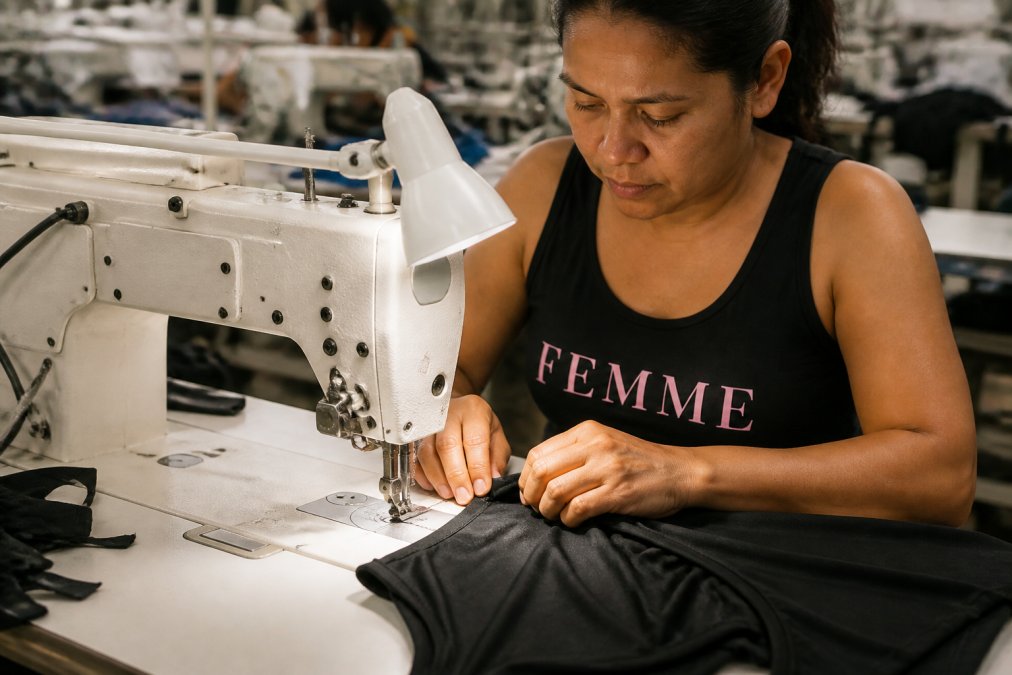
The labor itself reflects different wage standards. Facilities that pay workers fairly, maintain reasonable hour limits, and provide safe working conditions cost more to operate. A worker earning a living wage produces better work with lower defect rates than one exhausted and underpaid.
Manufacturing complexity also means smaller production runs. Quality apparel often involves smaller batches, more customization, and tighter quality control. The overhead per unit rises when you're not producing millions of identical pieces.
Garment construction details reveal this complexity. Flatlock seams prevent chafing. Gusseted armpits allow better movement. Reinforced hems prevent unraveling. A garment dyed after construction, like our Discipline Over Motivation T-Shirt, requires completely different equipment and processes than piece-dyed fabric, delivering dramatically better color longevity and feel.

How to Identify High Quality Fabric and Construction
You don't need to be a textile expert to spot quality. A few specific checks reveal what you're actually buying.
Fabric weight matters. Quality apparel feels substantial and dense. Check the weight specification if available, a 4 oz/yd² t-shirt feels noticeably different from a 5.3 oz/yd² version. Heavier fabric holds its shape better and survives more washing cycles.
Fiber content tells a story. Read the label carefully. A 60% cotton / 40% polyester blend can be engineered for specific performance. If fiber content isn't listed clearly, that's a red flag.
Seam construction is visible. Look at the inside of a garment. Are seams finished neatly or do they unravel? Do you see double-stitching or single? Are stress points reinforced? Quality garments show care in places you don't see.
Stitching consistency reveals attention. Examine the stitching pattern. Are stitches even and consistent or irregular? Inconsistent stitching usually means rushed production.
Hardware and closures matter. Buttons, zippers, and snaps should feel solid and move smoothly. Cheap buttons crack and cheap zippers jam.
Garment finishing shows craftsmanship. Check hems, cuffs, and necklines. Are they folded cleanly and stitched securely? A quality garment is finished completely, even in places you don't immediately notice.
Calculating Cost Per Wear for Long-Term Value
Cost-per-wear is the most honest way to evaluate clothing spending.
A $20 shirt worn 30 times costs 67 cents per wear (peer-reviewed research). A $35 shirt worn 200 times costs 17 cents per wear. The expensive shirt is cheaper in the long run.
Most people look at the initial price and flinch. But cheap apparel pills after a few washes, colors fade, elastic loses stretch, and seams pull apart. After 20-30 wears, it looks worn out. Quality apparel extends the wearing window significantly. A well-made cotton tee can look acceptable after 100 wears. A quality tank top survives 200+ wears before the fabric breaks down.
| Garment Type | Budget Price | Quality Price | Budget Lifespan | Quality Lifespan | Budget Cost-Per-Wear | Quality Cost-Per-Wear |
|---|---|---|---|---|---|---|
| Basic T-Shirt | $15 | $25 | 25 wears | 150 wears | $0.60 | $0.17 |
| Tank Top | $12 | $23 | 20 wears | 180 wears | $0.60 | $0.13 |
| Everyday Tee | $18 | $33 | 30 wears | 200 wears | $0.60 | $0.17 |
Quality apparel costs more upfront but delivers 5-10x longer lifespan, making the per-wear cost dramatically lower. Beyond the math, you wear clothes you love. A garment that looks good after 50 wears gets worn more often than one that looks tired after 15.
Benefits of Sustainable Fashion and Ethical Production
Quality apparel costs more partly because it's produced with actual consideration for environmental and human impact.
Sustainable production practices cost more to implement. Using natural dyes instead of synthetic ones requires different processes. Organic farming practices yield less per acre. Water-efficient manufacturing requires investment in different equipment.
Ethical manufacturing costs more because it's actually ethical. Fair wages, reasonable working hours, safe conditions, and proper training all cost more than the alternative. A facility paying workers a living wage will have higher labor costs than one operating as a sweatshop.
The environmental benefits compound over time. A garment that lasts 200 wears instead of 25 means you buy eight fewer garments to achieve the same wardrobe coverage. That's eight fewer garments requiring raw materials, manufacturing energy, transportation, and eventual disposal.
Fast fashion's true cost includes the waste it generates. Most cheap apparel ends up in landfills within a year of purchase (the EPA). Quality apparel that you wear for years eliminates that waste stream entirely.
Sustainable brands also tend toward timeless designs rather than trend-chasing. A garment designed to remain relevant for five years justifies the higher upfront cost.
Quality Control, Durability Standards, and Warranty
Quality apparel costs more because it's subject to actual quality control processes. Manufacturers test garments before shipping, checking for defects, verifying stitching holds under stress, confirming colors don't bleed, and ensuring elasticity survives repeated washing. Fast fashion skips most of this.
Durability standards matter. A quality manufacturer specifies how many washing cycles a garment should survive and designs to meet those standards. A cheap manufacturer simply produces as fast as possible.
Warranty and guarantee policies reflect confidence in durability. The Alpha Men Garment-Dyed T-Shirt from Inkspired Creations, for example, uses double-needle stitching throughout and avoids side seams entirely, a construction choice that preserves the garment's tubular shape through repeated washing.
Fast Fashion vs. Slow Fashion Economics
Fast fashion operates on volume and rapid turnover. Make as many garments as possible, sell them at low prices, replace them constantly with new styles. Profit comes from volume, not margin. A $10 shirt with a 60% margin generates $6 profit per unit. Sell a million units and you've got $6 million profit.
Slow fashion operates on different economics. Make fewer garments, price them higher, sell them to people who keep them for years. A $35 shirt with a 40% margin generates $14 profit per unit. You don't need to sell a million units to be profitable.
This explains why quality apparel costs more. The business model requires it. You can't produce ethically, use premium materials, implement quality control, and offer fair wages while charging $10 per garment. Fast fashion's low prices are only possible because of shortcuts: cheap materials, exploited labor, minimal quality control, rapid disposal.
From a consumer perspective, fast fashion feels cheaper because the upfront cost is lower. But the total cost of maintaining a wardrobe through constant replacement is dramatically higher than buying fewer, better pieces that last.
Quality apparel costs more because every step of production involves genuine choices that cost money: premium materials that last, labor compensated fairly, manufacturing processes that prioritize durability, and quality control that prevents defects. These aren't marketing talking points, they're the structural differences between clothing designed to be worn once and clothing designed to become a permanent part of your life.
At Inkspired Creations, we've built our entire approach around this reality. Our pieces, from the Women's FEMME Ideal Racerback Tank to the Women's T-Shirt FEMME Classic Black Softstyle Tee, reflect materials and construction chosen for longevity. When you invest in quality apparel, you're paying for garments that actually survive the wearing. Shop now and discover pieces built to celebrate your strength and resilience for years to come.
Frequently Asked Questions
Q: Why does quality apparel cost so much more than fast fashion?
A: Quality apparel costs more because of superior raw materials, ethical labor wages, rigorous quality control, and manufacturing complexity. Premium fabrics like high-grade cotton and natural fibers are more expensive than synthetic alternatives. Ethical manufacturing requires fair wages and safe working conditions, which increase production costs. Additionally, quality brands invest in durability testing and craftsmanship that extends garment lifespan, meaning you wear it hundreds of times instead of dozens, lowering your cost per wear significantly.
Q: How do I calculate cost per wear to justify higher apparel prices?
A: Divide the garment's price by the number of times you'll realistically wear it. A $35 quality tee worn 100 times costs $0.35 per wear, while a $10 fast fashion shirt worn 15 times costs $0.67 per wear. Quality apparel with superior durability and timeless design typically yields lower cost per wear. Track your actual wear patterns for a month to estimate annual frequency, then project across the garment's expected lifespan, usually 3-5 years for well-made pieces versus 6-12 months for lower-quality alternatives.
Q: What specific fabric and construction details signal high quality apparel?
A: Look for natural fibers (100% cotton, linen, wool) or quality blends with higher natural fiber content. Check fabric weight, premium apparel typically feels substantial, not flimsy. Examine stitching: straight, consistent seams with tight spacing indicate quality. Inspect seams, hems, and collar construction for reinforcement and double-stitching. Hardware (buttons, zippers) should feel smooth and durable. Read fiber content labels carefully; ring-spun cotton and combed cotton indicate superior processing. Feel the fabric, quality garments have a soft, finished texture rather than a stiff or synthetic feel.
Q: Is buying sustainable, ethically-made apparel actually worth the higher cost?
A: Yes, when considering total cost of ownership and long-term value. Sustainable fashion typically uses quality raw materials and ethical manufacturing practices, resulting in garments that last longer and maintain their appearance through more wash cycles. Beyond durability, ethical production supports fair labor wages and reduces environmental harm from microplastics, chemical runoff, and textile waste. Quality pieces hold their shape and color better, meaning fewer replacements and a smaller environmental footprint per wear. The upfront investment yields savings through longevity and reduced waste over time.
This article was written using GrandRanker